

Industrial Carbon Removal
Carbon removal you can count on. Finally.
Emicap is a system integrator for carbon capture to carbonated materials.
Emicap is Europe’s first system integrator for BECCUS and mineralisation. From capture to permanent storage in construction materials: one contracted value chain, one accountable operator. Our solution is modular and scalable.
97% of the carbon removal market consists of promises. Emicap integrates the full value chain and delivers.
CO₂/year
50 kton
Location
Belgium
Operational
H1 2028
Forward Agreements
5 years
The value chain
The biomass power plant uses waste wood to generate green energy.
Emicap integrates every step, from CO₂ source to certified removal
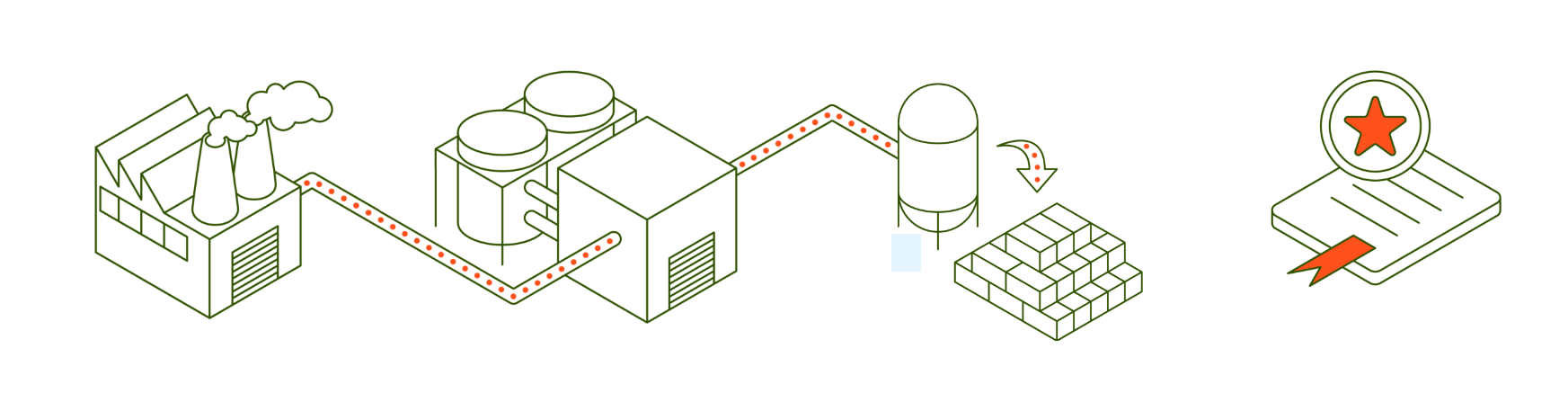
Emicap captures the biogenic CO₂ before it is released into the atmosphere.
No cure, no pay
Certification
Emicap adheres to the most stringent standards for permanent carbon removal. This provides buyers with certainty.
The captured CO₂ is permanently bound into construction materials on the same site.
Traceability
Every step in Emicap’s value chain is fully traceable. All operations take place in Europe, from source to storage within a 150-kilometre radius. The business model operates without reliance on European subsidies.
Certainty
Emicap provides a level of certainty the rest of the market cannot offer:
- A fully contracted value chain
- Proven, operational technology
- No cure, no pay
What sets Emicap apart?
Emicap is the system integrator that combines capture and mineralisation in one value chain. This translates into tangible benefits.
An independent verification body certifies the removal.
Buy carbon credits
Carbon removal needs new solutions now. Our chain is ready.
The first installation will be operational in 2028. By 2035, three additional installations will follow, with a total capacity of 200 kton CO₂ per year.
Your Questions, Answered
-
Emicap delivers permanent carbon removal via mineralisation. The CO₂ is bound into construction materials, where it remains for thousands of years. No risk of release, no dependence on forests that can burn.
-
The CO₂ is permanently stored through mineralisation. Once bound into materials, it remains stable for over 1,000 years. No degradation, no reversal.
-
Emicap works with forward agreements tailored to long-term buyers. Volumes are structured to match meaningful climate commitments.
-
Every step is fully traceable and independently verified. Buyers get direct insight into the process, from capture to storage.
-
Yes. The entire value chain is located in Belgium, within a limited radius. Physical access and transparency are part of the model.
-
You secure future carbon removal in advance. The difference: Emicap’s chain is already contracted and based on proven technology. No speculation, just delivery.
-
The installation is based in Belgium, with a fully local and controlled value chain.
-
Emicap evolved from LM Engineering. It is built by a team of engineers and builders with deep expertise in industrial systems, developing and operating their own carbon removal technology.